

Dubai’s commercial engine never pauses. Restaurants receive fresh stock each morning. Retail outlets restock daily. Construction sites demand material runs on short notice. E-commerce brands promise same-day delivery. Behind all of it is one constant need: reliable, flexible transport.
1 ton pickup truck rental in Dubai is exactly how businesses solve this challenge. You get a capable vehicle when you need it — no large capital investment, no maintenance burden, no downtime from breakdowns. Just dependable transport that keeps operations moving.
This guide covers everything: the step-by-step rental process, which businesses benefit most, how to choose between short-term and long-term plans, and when a standard pickup simply is not the right tool for the job.
Already know pickup basics? Our complete 1 ton pickup truck in UAE guide covers vehicle specifications and capabilities.
Understanding 1 Ton Pickup Truck Rental in Dubai
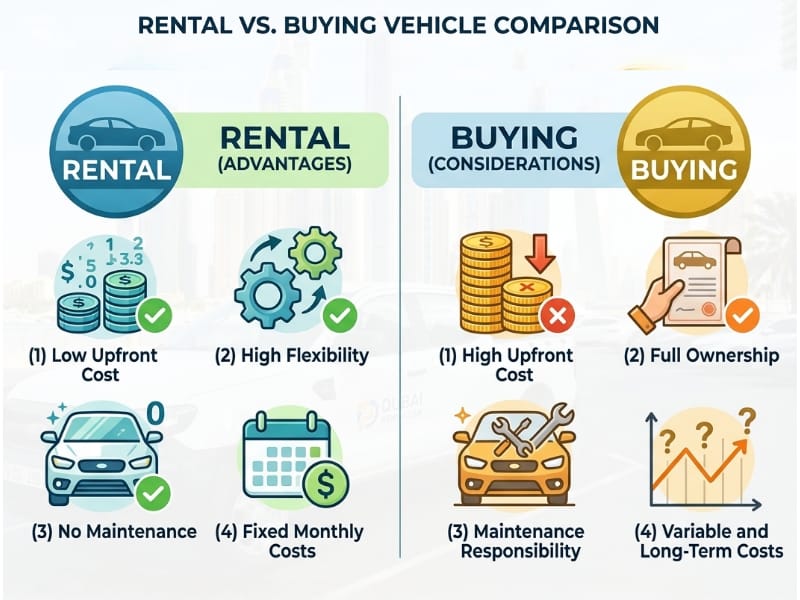
Renting a pickup truck means using a vehicle for a set period — daily, weekly, or monthly — while the rental company handles all maintenance and compliance. Think of it like renting commercial space instead of buying property. You get what you need, when you need it, without locking capital into a depreciating asset.
Why businesses choose rental over ownership:
- Flexibility — Delivery demand shifts with seasons, Ramadan, and sales cycles. Rental scales with you.
- Cost control — Buying a 1-ton truck costs AED 80,000–120,000. Monthly rental starts from AED 3,000. Capital stays where it is needed most.
- Zero maintenance stress — The rental company fixes problems. Breakdown? They send a replacement. No lost delivery days.
Standard inclusions in most rentals:
- Toyota Hilux or equivalent
- Valid insurance coverage
- 24/7 roadside assistance
- Clean, maintained vehicle
- Full fuel tank at pickup
You pay separately: fuel, Salik tolls, parking fees, and any traffic fines.
Step-by-Step Guide to Renting a 1 Ton Pickup in Dubai
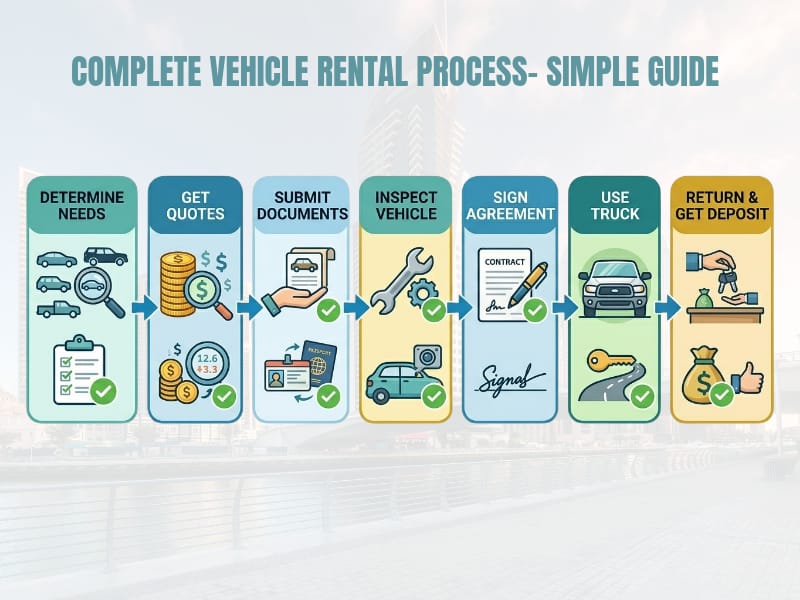
7 boxes connected showing rental process
Step 1: Define Your Requirements
Before contacting providers, clarify four things:
- Duration — 1–3 days needs daily rental; 1–4 weeks suits weekly; 1+ months calls for a monthly contract
- Cargo type — Dry goods and equipment fit a standard pickup; fresh food and perishables need a chiller van; frozen items require a freezer van
- Daily mileage — Under 200 km works on a standard package; over 300 km needs unlimited mileage
- Driver availability — Self-drive or with-driver options both exist
Step 2: Get Multiple Quotes
Contact three to five providers. Give each the same information: rental duration, expected mileage, delivery zones, and any special requirements. Compare total costs, not headline prices. Ask specifically about hidden charges.
Step 3: Submit Documents
Business rentals typically require a valid UAE driving licence (minimum one year old), Emirates ID, company trade licence, and a credit card for the security deposit. Approval usually takes under 30 minutes.
Step 4: Inspect the Vehicle
Never skip this step.
- Outside: Check tyres, body panels, lights, and mirrors
- Inside: Confirm air conditioning, dashboard warnings, and seat belts
- Cargo bed: Check for sharp edges, tailgate function, and tie-down points
Photograph any existing damage before driving away.
Step 5: Review and Sign the Agreement
Read the contract in full. Confirm the rental period, total cost breakdown, mileage limits, insurance deductible, fuel policy, and late-return penalties. Ask about anything unclear before signing.
Step 6: Use the Vehicle Responsibly
Adjust mirrors and seat before the first run. Save the emergency contact. Secure cargo properly, park legally, and report any issues immediately.
Step 7: Return on Time
Refuel to a full tank, clean the cargo bed, remove personal items, and complete the return inspection with staff. Security deposits are typically released within 7–10 days.
Who Rents 1 Ton Pickup Trucks in Dubai?
Dubai’s commercial environment supports a wide range of businesses that depend on flexible transport.
Retail and E-Commerce — Online sellers and brick-and-mortar stores use pickups to move electronics, appliances, and packaged goods from warehouses to customers across the city.
Food and Beverage Companies — Restaurant suppliers deliver canned goods and dry ingredients in standard pickups. Bakeries move packaged bread and pastries to cafes. Catering companies transport tables, chairs, and serving equipment to event venues.
Warehouse and Distribution Operations — Industrial zones including Al Quoz, Jebel Ali, and Dubai Investment Park rely heavily on pickup transport for short-distance stock transfers between warehouses and retail outlets.
Startups and Seasonal Businesses — New businesses testing delivery models avoid large purchase commitments. Seasonal operators — gift shops at holidays, school suppliers in August — rent only during active periods.
Short-Term vs. Long-Term Pickup Rental: What Works Best?
Step-by-Daily Rental
Best for emergencies and one-off needs: a regular vehicle breaks down, a client places an unusually large order, or a business wants to test a new delivery route before committing.
Typical cost: AED 300–450 per day. Practical for 1–5 days. Expensive as a default option beyond that.
Weekly Rental
Suited for short projects, trade shows, exhibition setups, or temporary seasonal spikes like Ramadan or back-to-school demand.
Typical cost: AED 1,500–2,500 per week — roughly 20–30% cheaper than paying at daily rates.
Monthly Rental
The most cost-effective choice for businesses with regular delivery routes operating 15 or more days per month.
Typical cost: AED 3,000–6,500 per month, bringing the effective daily cost down to AED 115–250.
Annual Contracts
Large businesses with consistent fleet needs often negotiate annual agreements for 20–25% savings compared with monthly rates, along with priority vehicle availability.
Rental Duration Comparison
| Duration | Best For | Daily Cost | Flexibility |
| Daily | 1–5 days, emergencies | AED 350–450 | Maximum |
| Weekly | 1–4 weeks, short projects | AED 215–360 | High |
| Monthly | Regular operations | AED 115–250 | Medium |
| Annual | Established businesses | AED 95–180 | Low |
When a Standard Pickup Is the Wrong Vehicle
Standard pickup trucks carry cargo at ambient temperature. In Dubai’s summer, that means 45°C+. For dry goods, equipment, or packaged items, this is not a problem. For perishable cargo, it is a compliance issue and a commercial risk.
Standard pickups work fine for: packaged goods, dry ingredients, restaurant equipment, furniture, building materials, electronics in protective packaging.
Standard pickups fail for: fresh meat and poultry, dairy products, vegetables and fruits, cream-filled bakery items, ice cream and frozen desserts, and confectionery.
Dubai Food Safety regulations enforce strict food transport regulations. Carrying perishables in unrefrigerated vehicles can result in heavy fines and potential licence suspension. This is not a grey area.
The right solution is temperature-controlled transport. Polar Freights specialises in refrigerated logistics across the UAE. Our fleet covers every requirement:
- Chiller vans — +2°C to +8°C for fresh meat, dairy, produce, and prepared foods. Available in standard and high-roof configurations.
- Freezer vans — -18°C to -25°C for ice cream, frozen foods, and long-term frozen storage. See our freezer van rental service.
- Chiller trucks — 3-ton to 7-ton capacity for bulk cold-chain distribution.
Many businesses use both: standard pickups for dry goods and equipment, Polar Freights chiller vans for perishables. This combination controls costs while maintaining full compliance.
Real-World Case Studies: Cold Chain Transport in Dubai
Case Study 1: Restaurant Ingredient Supplier
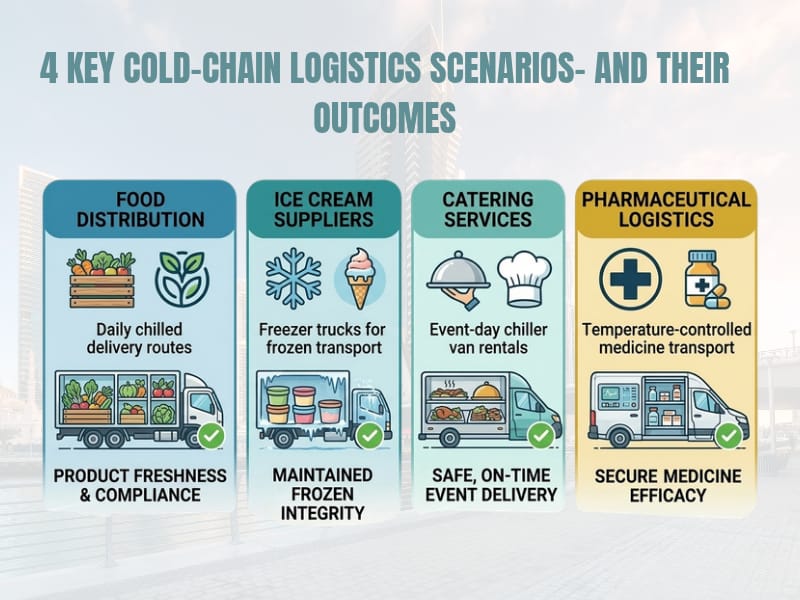
A Dubai-based distributor delivering fresh meat, dairy, and vegetables to restaurants in Business Bay, Jumeirah, and Dubai Marina faced spoilage risks using standard vehicles during summer. After switching to Polar Freights’ chiller van rental, early-morning deliveries improved in consistency, food safety compliance was maintained, and spoilage was eliminated.
Case Study 2: Ice Cream Wholesaler
A frozen dessert supplier distributing to supermarkets across Dubai and Sharjah was experiencing product loss from temperature fluctuations in standard vehicles. Polar Freights’ freezer truck rental maintained products at below -18°C throughout delivery. Product loss dropped to zero even at peak summer demand.
Case Study 3: Corporate Catering Company
A catering business managing weddings and corporate events needed to transport prepared meals and desserts from a central kitchen to venues without compromising food safety. Chiller van rental from Polar Freights allowed the team to manage multiple events simultaneously with consistent food quality on delivery.
Case Study 4: Medical Supply Distributor
A pharmaceutical logistics company delivering temperature-sensitive medicines to hospitals and pharmacies across the UAE required strict cold-chain compliance. Polar Freights’ refrigerated trucks maintained required temperature ranges between warehouses and healthcare facilities, meeting regulatory requirements throughout.
Common Rental Mistakes to Avoid
Underestimating total costs — Budget separately for fuel (~AED 700), Salik (~AED 700), parking (~AED 500), and fines.
Not reading the contract — Mileage limits and insurance deductibles catch businesses off guard. Read every clause.
Skipping the inspection — Photograph existing damage before leaving the lot.
Wrong rental duration — Daily rates for 15+ days waste money. Switch to monthly.
Ignoring mileage limits — Excess mileage charges add up fast. Get unlimited if your routes require it.
Wrong vehicle for the cargo — Using a standard pickup for fresh food in Dubai is a regulatory risk, not just an operational one.
Late returns — A three-hour delay can cost a full extra day. Build buffer time into your schedule.
Making Your Rental Decision
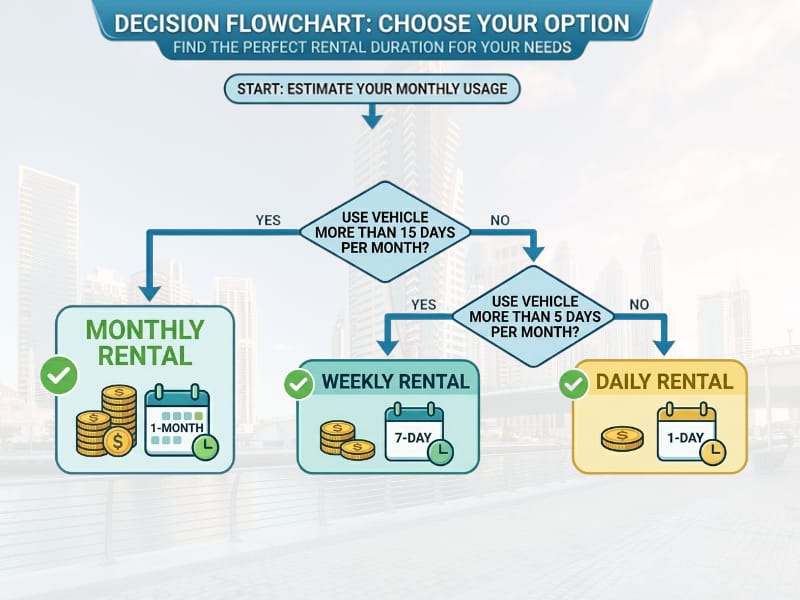
Evaluate Your Actual Needs
How many delivery days monthly?
1-5 days = Daily rental
6-15 days = Weekly rental
16+ days = Monthly rental
What’s your cargo?
Dry goods = Standard pickup
Perishables = Temperature-controlled vehicle
How long will this need continue?
Short-term project = Flexible rental
Ongoing operations = Long-term contract
Compare Providers
Get quotes from multiple companies. Check:
- Total cost including all fees
- Insurance coverage details
- Vehicle age and condition
- Customer reviews online
- Response time for problems
Start Small, Scale Smart
Don’t commit to annual contracts immediately. Start with shorter rentals. Test the service. Understand your real usage. Then negotiate better rates for longer commitments.
Conclusion
1 ton pickup truck rentals offer businesses in Dubai a practical and cost-effective transport solution. Companies can move goods without the expense of purchasing and maintaining their own vehicles.
Rental options allow businesses to match vehicle usage with delivery demand. Short-term rentals work well for temporary needs, while long-term contracts provide better value for regular operations.
It is also important to choose the right vehicle for the cargo. Standard pickups are suitable for dry goods, but perishable items such as food, dairy, meat, or frozen products require temperature-controlled vehicles to maintain proper cold-chain conditions.
Businesses should compare rental providers, review pricing and service terms, and select a plan that fits their logistics needs. With the right transport solution, companies can maintain reliable deliveries while keeping operational costs under control.
FAQs
What is the difference between a 1 ton pickup and a chiller van rental in Dubai?
A standard 1 ton pickup carries cargo at ambient outdoor temperature — suitable for dry goods, equipment, and packaged items. A chiller van maintains a controlled temperature between 0°C and +8°C and is required for fresh food, dairy, pharmaceuticals, and other perishables. Polar Freights provides both options with daily, weekly, and monthly rental plans.
How much does a 1 ton pickup truck rental cost in Dubai per month?
Monthly rental for a 1 ton pickup in Dubai typically ranges from AED 3,000 to AED 6,500 depending on the provider, vehicle model, and inclusions. Daily rates usually fall between AED 300 and AED 450. Fuel, Salik tolls, and parking are charged separately in most contracts.
Can I rent a 1 ton pickup in Dubai without a driver?
Yes. Most rental providers offer self-drive pickup rentals for holders of a valid UAE driving licence that is at least one year old. Driver-included options are also widely available, which removes the need to manage visa, insurance, and training costs for the driver yourself.
What documents are needed to rent a pickup truck in Dubai?
You will need a valid UAE driving licence, Emirates ID, a credit card for the security deposit, and a company trade licence for business rentals. The approval process typically takes under 30 minutes.
Is it better to rent or buy a 1 ton pickup truck for business deliveries in Dubai?
For most SMEs in Dubai, renting is the more practical option. Purchasing a pickup costs AED 80,000–120,000 before insurance, maintenance, RTA registration, and driver costs. Renting eliminates these overheads, provides immediate replacement in case of breakdowns, and allows the business to scale the fleet up or down based on real demand.
What happens if the rented pickup breaks down during a delivery?
Call the rental company immediately. Professional providers dispatch a replacement vehicle within one to two hours. The rental clock is paused during the breakdown period.
Can a rented pickup truck be used across multiple emirates?
Yes. Most UAE pickup rental contracts permit travel across all emirates. Confirm this in the agreement before signing, as some budget providers restrict inter-emirate travel.