
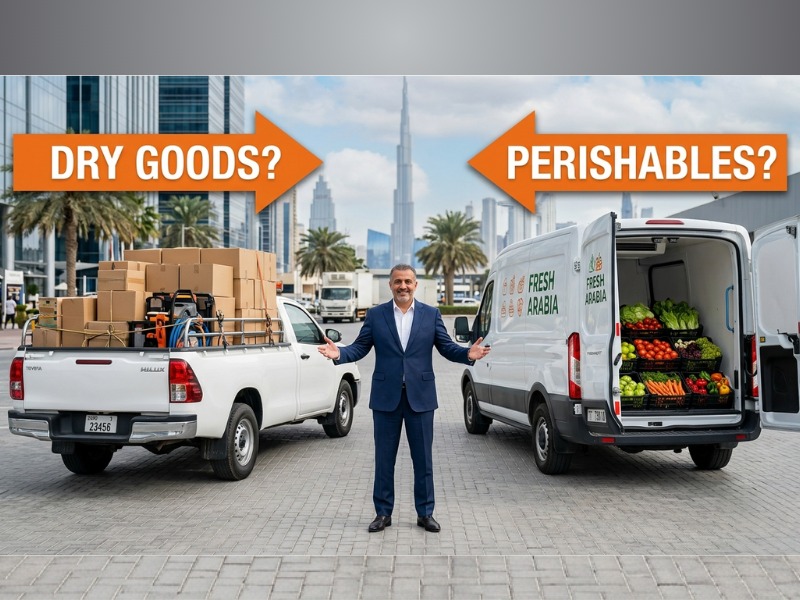
Wrong vehicle choice costs money. A restaurant hire 1 ton pickup for rent to deliver its fresh meat. Dubai Municipality inspector stops them. Fine: AED 15,000. Business license suspended for 30 days. All because they didn’t know the difference.
The right 1 ton pickup protects your business and budget. Pickups work perfectly for certain cargo. They fail for others. Understanding this difference keeps you legal, profitable, and efficient.
This guide helps you decide when pickups make sense. You’ll see real delivery scenarios. Learn which cargo fits safely. Understand cost comparisons. Discover why small businesses love this flexibility.
Need pickup basics first? Our 1 ton pickup truck in UAE guide covers complete specifications and capabilities.
Understanding Your Cargo: The Critical First Question
A 1-ton pickup is designed for flexibility. It handles moderate loads, moves easily through busy city areas, and supports quick delivery cycles. However, it is not a one-size-fits-all solution. If your business deals with packaged goods, tools, or non-sensitive items, a pickup becomes a reliable daily transport option. On the other hand, if your operations involve fresh food, dairy, or frozen products, then using a standard pickup creates risk.
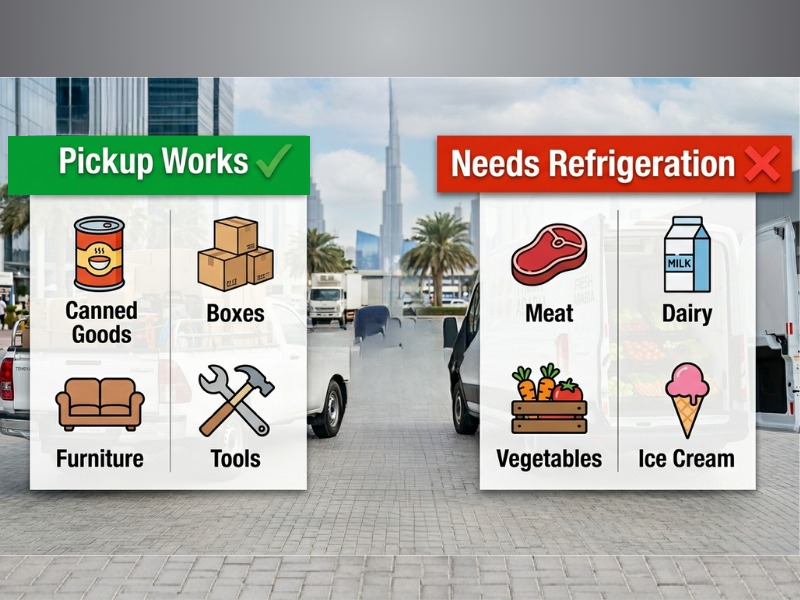
Summer temperatures hit 45°C in Dubai. Pickup truck beds reach 50°C under direct sunlight. Items sitting inside experience these temperatures. No cooling exists. No temperature control. Just outdoor heat.
In such cases, temperature-controlled transport becomes necessary to maintain product quality and meet regulatory requirements. This distinction is where most businesses make the wrong decision. In simple terms:
- If your product needs cooling → use a refrigerated truck
- If not → a pickup is a practical solution
Legal Requirements Matter For Temperature Sensitive Goods
Dubai Municipality doesn’t accept ignorance as an excuse. Food safety regulations require proper temperature control for perishables. Using pickups for fresh food violates these rules.
Penalties include:
- Fines: AED 5,000 to AED 50,000 per violation
- Business license suspension: 15-30 days
- Food permit revocation for repeat offenses
- Legal liability if contaminated food causes illness
The solution? Temperature-controlled transport. Polar Freights specializes in this exact challenge. Our chiller van services maintain +2°C to +8°C for fresh items. Our freezer vans keep -18°C to -25°C for frozen goods. We’ve protected Dubai businesses for 17 years with 99% on-time delivery and full regulatory compliance.
For everything else? Pickups work perfectly.
Where a 1 Ton Pickup for Rent Works Best in Dubai
Dubai’s areas directly influence how effective a pickup can be.
In Al Quoz, businesses operate from warehouses and workshops. Pickups move efficiently between suppliers and clients due to better road access and loading space.
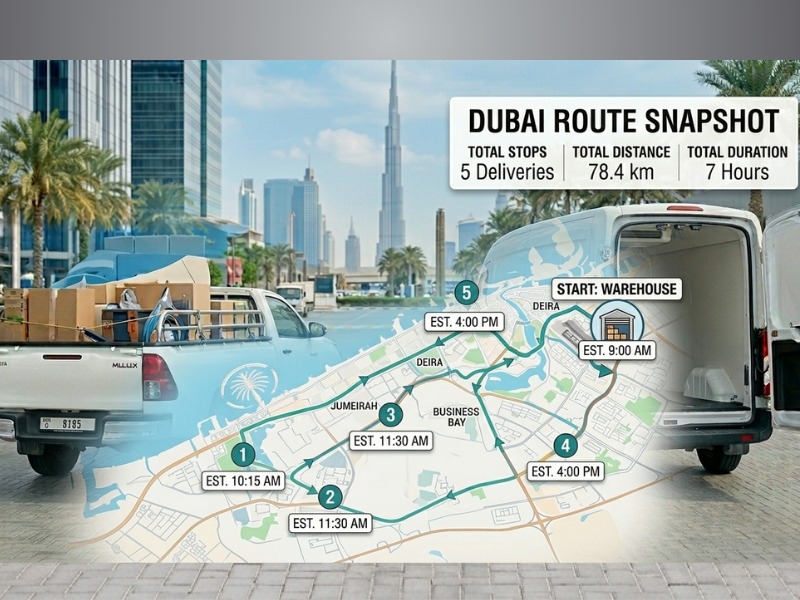
In Deira, where streets are narrow and traffic is dense, pickups become even more valuable. Their smaller size allows easier navigation compared to larger trucks.
Industrial hubs like DIP (Dubai Investment Park) and Jebel Ali rely on pickups for short-distance transfers, warehouse movement, and last-mile deliveries.
This is why businesses prefer pickups for:
- In-city logistics
- Multi-stop delivery routes
- Quick warehouse-to-retail movement
Load Capacity: Where the Practical Limit Actually Sits
A 1-ton pickup is designed to carry up to 1,000 kg, but efficient operations usually stay below that. It performs best when:
- The load is moderate
- Routes are short
- Cargo does not need an enclosure
Sustained overloading degrades brakes, suspension, and tires more quickly than you might expect. In a rental context, such behavior poses a risk: the renter typically bears the responsibility if a vehicle returns with damage linked to overloading. Beyond cost, overloaded vehicles handle differently in emergency stops, which matters on Sheikh Zayed Road during peak hours.
Table: Cargo Decision Matrix
| Cargo Type | Weight | Temperature | Best Vehicle |
| Canned foods | 300-600 kg | Ambient OK | Pickup ✓ |
| Fresh meat | Any weight | Refrigerated | Chiller van ✓ |
| Furniture | 400-800 kg | Ambient OK | Pickup ✓ |
| Ice cream | Any weight | Frozen | Freezer van ✓ |
| Building materials | 500-900 kg | Ambient OK | Pickup ✓ |
| Fresh vegetables | Any weight | Refrigerated | Chiller van ✓ |
| Office equipment | 200-500 kg | Ambient OK | Pickup ✓ |
| Frozen fish | Any weight | Frozen | Freezer van ✓ |
Once your operations exceed these limits, whether in terms of weight, volume, or sensitivity, switching to a larger or specialized vehicle becomes necessary.
The practical rule: if your average load sits between 500–800 kg, the pickup works comfortably. If you’re regularly pushing past 900 kg, or if cargo dimensions make loading awkward even when weight is technically fine, a 1.5-ton or 3-ton vehicle gives you better margins without significantly higher rental costs.
Cost Efficiency Depends on Usage
Pickups are cost-effective, but only when used correctly.
- Occasional use → daily rental works
- Regular use → weekly or monthly rental saves cost
- Growing operations → long-term rental improves stability
For a detailed cost breakdown, you can read: 1 ton pickup rental price in UAE
Common Mistakes to Avoid
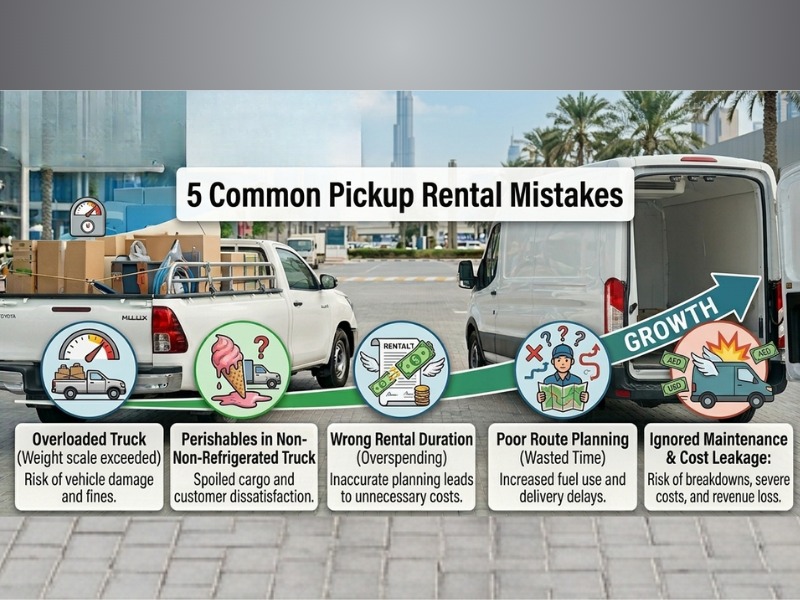
Mistake 1: Choosing Pickup for Temperature-Sensitive Cargo
What happens: The business tries to save money using pickup for fresh food. Gets caught or food spoils. Loses more than they saved.
The fix: Match vehicle to cargo requirements. Fresh items legally require refrigeration. Period.
Mistake 2: Overloading Beyond Capacity
What happens: “1 ton should handle this,” thinking. Load exceeds 1,000 kg. Vehicle struggles. Brakes fail. An accident occurs.
The fix: Respect weight limits. If cargo exceeds 800 kg regularly, rent a 3-ton truck instead.
Mistake 3: Daily Rental for Regular Needs
What happens: The business uses pickups for more than 20 days each month but continues to book them daily. Pays AED 7,000+ monthly for what monthly contract costs AED 4,000.
The fix: Calculate actual usage. Switch to weekly or monthly when it saves money. See our rental price guide for detailed breakeven calculations.
Mistake 4: Wrong Duration Choice
What happens: Commits to a monthly contract for an uncertain project. Project finishes in 2 weeks. Pays for unused time.
The fix: Start with shorter rentals for uncertain needs. Extend when demand confirms.
Mistake 5: Ignoring Route Planning
What happens: Random delivery order wastes time. Cross-city back and forth. Burns fuel. Exceeds mileage limits.
The fix: Plan routes geographically. Group deliveries by area. Minimize total distance.
Making the Right Decision
Before choosing a 1 ton pickup for rent, ask yourself:
- What type of cargo am I transporting?
- Does it require temperature control?
- How often will I use the vehicle?
- Are my routes short and within the city?
If your business handles dry goods and operates within urban routes, a pickup is a reliable and flexible option.
If your operations involve perishable or sensitive goods, then using a specialized transport solution is the better decision.
Conclusion
A 1 ton pickup for rent in Dubai is a practical solution for businesses that need flexible, cost-efficient transport for non-sensitive goods.
It works best for short-distance deliveries, moderate loads, and daily operations across areas like Al Quoz, Deira, DIP, and Jebel Ali.
However, it is not suitable for temperature-controlled logistics. Businesses that understand this difference operate more efficiently and avoid unnecessary risks.
In the end, the right decision is simple: Choose the vehicle that fits your job, not just your budget.
Q1: Can I use a pickup truck for both dry goods and fresh food deliveries?
Yes. however Dubai Municipality regulations prohibit mixing. Use pickups for dry goods only. Fresh food legally requires chiller vans or refrigerated trucks. Violations bring AED 5,000-50,000 fines.
Q2: Do rental pickups come with insurance?
Yes. Comprehensive insurance included with AED 2,000-3,000 deductible. You pay this amount if accidents occur. Lower deductibles cost extra.
Q3: Can I rent a pickup for just weekend deliveries?
Yes. Many businesses rent Friday-Saturday only. Some companies offer weekend packages. Otherwise, book 2-3 daily rentals.
Q: What areas in Dubai are difficult for pickup access?
Most areas work fine. Only very narrow villa community lanes or underground parking with height restrictions create challenges. Pickups handle 95% of Dubai locations easily.